Technical Note: Building Safety Act 2022 (UK)

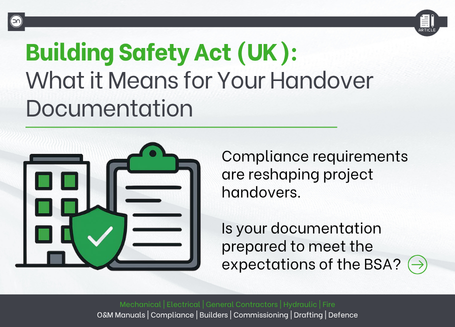
The Building Safety Act 2022 is a major piece of UK legislation introduced to reform building safety in England and Wales (See below for specific detail on application in Wales), by setting out stringent regulatory requirements for high-rise residential buildings and clarification on the responsibilities of those who design, build, and manage them.

Background

Following the Grenfell Tower fire in June 2017, investigations exposed serious failures in building safety, regulation, and accountability across the construction and property sectors.   Specifically, the Dame Judith Hackitt independent review “Building a Safer Future” identified a “cultural malaise” in the construction industry. The Act was built to fix the issues she identified:

  • Lack of accountability: To ensure there is always a “Principal Accountable Person” responsible for safety.
  • Inaccurate information: To ensure owners actually know how their buildings were built and how to maintain fire safety systems.
  • Poor oversight: To stop developers from “choosing” their own building inspectors to bypass rigour.

Application

The Act provides a legal framework that shifts the focus of building regulations from “minimum compliance” to “demonstrable safety” through three key elements:

  • The Golden Thread: a digital continuous, accurate record of a building’s design, construction, and management.
  • Gateways: that act as mandatory stop points to ensure safety is considered at every stage:
    • Gateway 1 (Planning): Focused on fire safety (e.g., access for fire appliances).
    • Gateway 2 (Pre-Construction): A “hard stop” where work cannot commence until the BSR approves the building control application. This requires detailed design documents, not just “intent.”
    • Gateway 3 (Completion): Occurs at the end of construction. A building cannot be occupied until the BSR issues a Completion Certificate.
  • Higher-Risk Buildings (HRBs) category for buildings at least 18 metres tall or 7 storeys, AND contains at least 2 residential units (including student accommodation, hospitals, and care homes) which are subject to the strictest oversight.
Governance

In England, the Building Safety Regulator (BSR) are the sole enforcers of the Building Safety Act 2022, with the authority to issue Compliance Notices, Stop Notices, prosecute individuals or companies for non-compliance and finally completion certificates.  If Gateways are not checked off, or documentation is not deemed to meet the technical standards and requirements the BSR will not issue a Completion Certificate, and the building cannot legally open.

Documentation Requirements

To satisfy the Building Safety Regulator (BSR), documentation is not just a hand-over requirement; it is a statutory gateway. For Higher-Risk Buildings (HRBs), you must produce specific “prescribed documents” at three distinct stages.

Failure to provide this information results in a “hard stop,” meaning construction cannot start, will be halted or the building cannot be legally occupied.

Gateway 1: Planning

Integrated into the planning process, a local planning authority cannot grant planning permission for an in-scope building unless the Building Safety Regulator (BSR) has been consulted and is satisfied with the Fire Statement provided for the building.  This is not a full fire strategy, but it must technically address: fire service access, water supplies, basic information on the building’s use, height, and number of storeys, initial thoughts on escape routes and fire-fighting shafts and confirm how the design meets specific fire safety policies in the local development plan.

Gateway 2: Pre Construction

Following on from the Planning Phase, the building’s “single source of truth” (the Golden Thread documentation) is expanded to include:-

  • Competence Declaration: Signed statements confirming that the Principal Designer, Principal Contractor, and their teams have the specific skills and knowledge to perform their roles.
  • Building Regulations Compliance Statement: A detailed narrative explaining how every aspect of the project meets each relevant part of the Building Regulations (e.g., Part B for Fire, Part A for Structural).
  • Fire and Emergency File (FEF): This replaces the old fire strategy. It must detail the prevention, detection, and suppression measures and the assumptions behind them.
  • Construction Control Plan: A strategy outlining how the site will be managed to ensure the as-built building matches the design.
  • Change Control Plan: A log and process for how any deviations from the approved plans will be recorded and reported to the BSR.
  • Mandatory Occurrence Reporting Plan: The process for reporting safety-critical incidents during construction.

Gateway 3: Completion

Before the BSR can issue a Completion Certificate, the following documentation must be provided, which details and proves that what was built matches what was approved during the planning and pre-construction phases.  These are submitted and reviewed in detail by the BSR to ensure compliance:

  • Building Handover Manual: providing maintenance and operational information for the architectural and structural elements of a building.
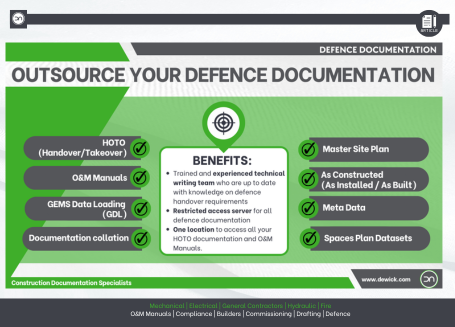
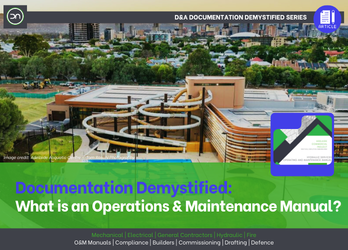
  • O&M Manuals: a digitally searchable document providing information on the Mechanical and Electrical building services systems installed.
  • Health and Safety File (CDM 2015): a primary source of information for the Golden Thread.
  • Regulation 38 File: providing comprehensive fire information for the building.
  • CIBSE TM31 Log Book: BSR specifically review to confirm that all life-safety systems are commissioned correctly.
  • As Built Drawings: CAC / revit / PDF drawings reflecting the actual building layout and installation.
  • Completion Declaration: Signed by the Client, Principal Designer, and Principal Contractor, confirming that the building complies with all regulations.

On submission of Gateway 3 documentation, the Building Safety Regulator (BSR) has 8 weeks to review and approve an application for a Higher-Risk Building and issue the Completion Certificate.  Only once approval has been received can an individual legally occupy the building or sell / lease spaces.  If documentation is rejected, the time period will start again, causing the building to sit empty and return on investment frozen.

Dewick & Associates Support

Dewick & Associates acts as the information coordinator and technical author necessary to bridge the gap between standard construction documentation and BSA 2022 Compliance. For a contractor, the BSA represents a large administrative and legal risk; we mitigate that risk by taking ownership of the Golden Thread deliverables:

  • Technical Authoring of prescribed documents:  The BSR does not accept generic manufacturer data sheets. They require authored narratives and verified data.  Unlike a standard O&M Manual collator, we have the technical engineering background to write the content, not just collect the folders. We ensure the design intent matches the as-built reality.
  • Golden Thread Management (Digital-First): The BSA mandates that information be stored and managed digitally throughout the building’s life.  We ensure all Building Handover Manuals, O&M Manuals, Health & Safety Files, Regulation 38 Files and CIBSE TM31 Logbooks are hyperlinked, searchable, and interoperable.
  • Verification of As-Built Evidence: A major hurdle for contractors at Gateway 3 is proving that “hidden” elements (like fire stopping) were installed correctly.   We are able to coordinate the collection of photographic and GPS-tagged evidence of fire-stopping, cavity barriers, and structural protection which can be integrate this directly into the Regulation 38 File.
  • Competence and Duty Holder Coordination:  We assist in collating the Competence Records for the entire supply chain, to ensure every subcontractor providing safety-critical information.  Our technical team check and verify these documents provide to approval.
  • Transition to the Safety Case Report:  Dewick & Associates structure all handover documentation so it feeds directly into the Building Safety Case Report, as required by the Principal Accountable Person (PAP) to register the building and apply for a Building Assessment Certificate.

Conclusion

Compliance with the BSA 2022 requires meticulous technical authoring and information management.   The Building Safety Act reinforces the importance of structured documentation frameworks, an area where Dewick & Associates provides specialist expertise.  Our methodology typically includes:

  • Alignment with recognised structures (e.g. BSRIA BG79 principles)
  • System- and asset-based document indexing
  • Digital first delivery formats suitable for asset management systems
  • Clear linkage between assets, certification, and maintenance requirements

This approach ensures that:

  • Information is consistent across all disciplines
  • Documentation is searchable and navigable
  • Safety-critical data is prioritised and clearly flagged
  • The golden thread can be maintained throughout the building life cycle

FOOT NOTE: Application to the Other Home countries

The Building Safety Act 2022 applies primarily to England and Wales, with very limited application in Scotland and Northern Ireland, and it does not apply to the Republic of Ireland.

The building regulations are a “devolved” matter with each nation setting our compliance laws and requirements themselves:

  • England: The Act applies in full.
  • Wales: The Act applies, but Wales has its own version:
    • Broader scope, defining a HRB as any building 18 metres+ high or 7 storeys with at least 1 residential unit.
    • Governance is through the Welsh Government, sharing many of the same principles (like the Golden Thread).
  • Scotland: The Act has almost no application, instead the Building (Scotland) Act 2003 is adopted.
  • Northern Ireland: The Act has almost no application the Building Regulations (NI) 2012 are adopted.
  • Republic of Ireland (ROI): The Act has no application. Ireland is a sovereign nation and an EU member; it follows its own Building Control Act and the “BCAR” (Building Control Amendment Regulations) system.

AuthorLouise Gardner, General Manager at Dewick & Associates

Subscribe to our email newsletter to receive the latest news and updates

"*" indicates required fields